CSA Standards
CSA Z1009:22: Management of Work at Heights
The curriculum follows CSA Z1009:22 and the supporting CSA Z259 series, forming a consistent national baseline for fall protection instruction across Canada.

4days
Duration
3years
Validity
$3,000
Price
In‑person
Format
Overview
Build your organization's in-house training capacity with a standardized fall protection program aligned with CSA standards for equipment and training.
This is a train-the-trainer program: you are certified to teach Fall Protection User to your own people.
Program Structure
Each day builds on the last, from experiencing the curriculum as a student to delivering it as a certified instructor.
You attend Haland's Fall Protection User course as a student, the exact same course you'll be certified to teach. You experience the full curriculum from your future students' perspective, building technical knowledge and firsthand insight into how the course flows.
You Leave With
Fall Protection User Certification + firsthand experience of the complete end-user curriculum
Deep dive into CSA standards, equipment knowledge, and fall distance calculations that underpin the curriculum, paired with adult learning theory and facilitation techniques. You get both the subject matter expertise and the framework to teach it confidently.
You Leave With
Technical mastery + a structured approach to adult instruction
You teach. Each candidate delivers assigned sections of the course and receives direct coaching on instructional skill, content accuracy, and delivery confidence. Peer review and self-evaluation are built into the day.
You Leave With
Two coached rounds of practice delivery
An additional day of instructional practice. Each candidate delivers further assigned sections of the course, with another round of coaching, peer review and final evaluation.
You Leave With
Instructor Certification + the confidence to deliver from Day 1
The complete system
Everything you teach, test and certify with comes as one matching set.
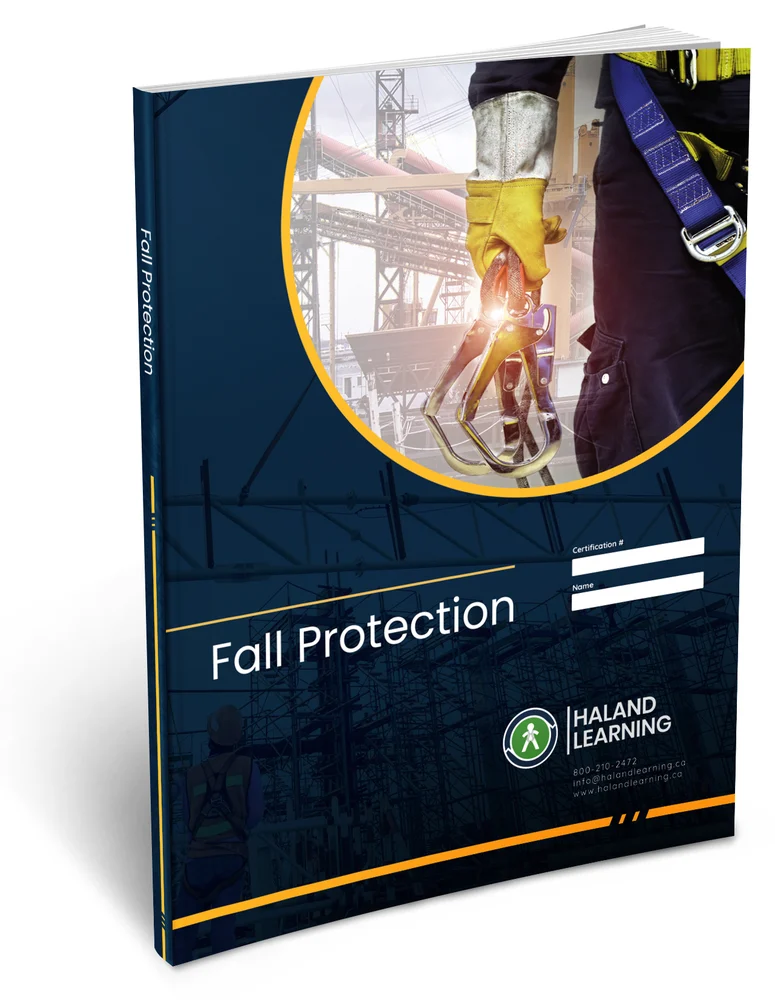
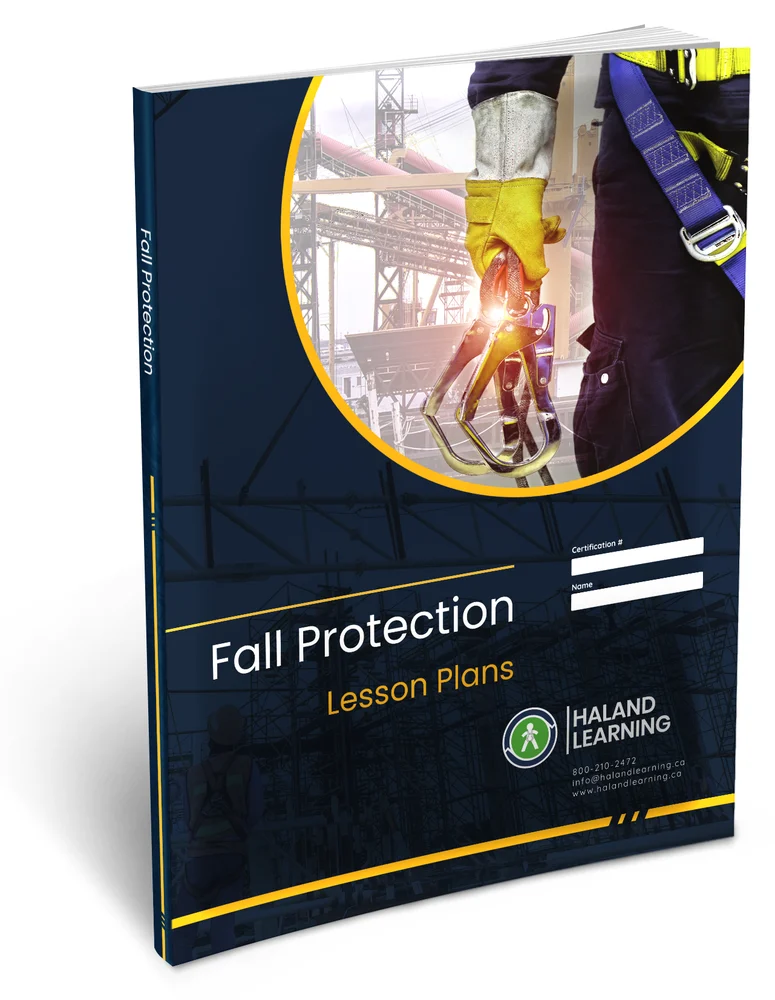
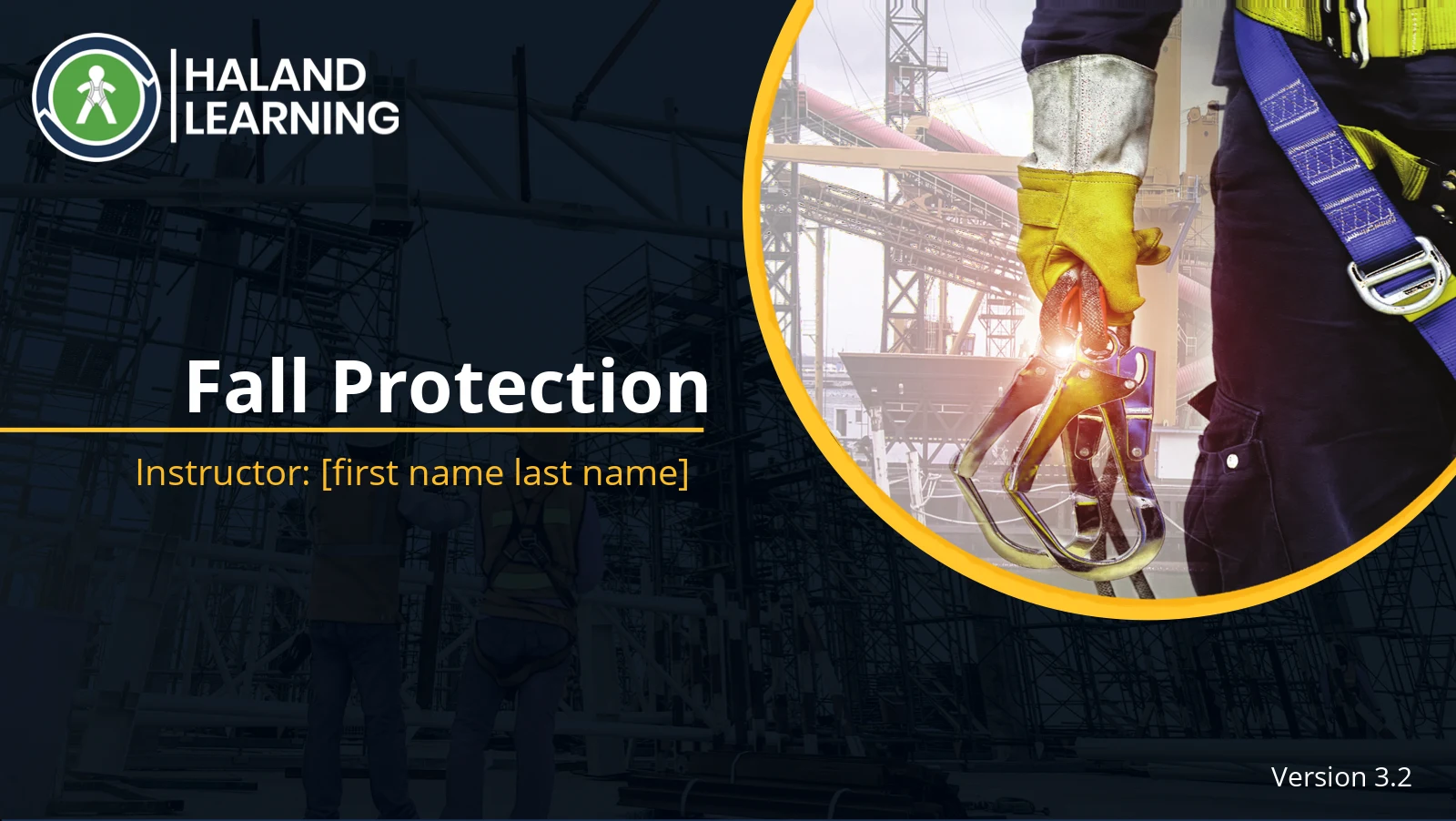
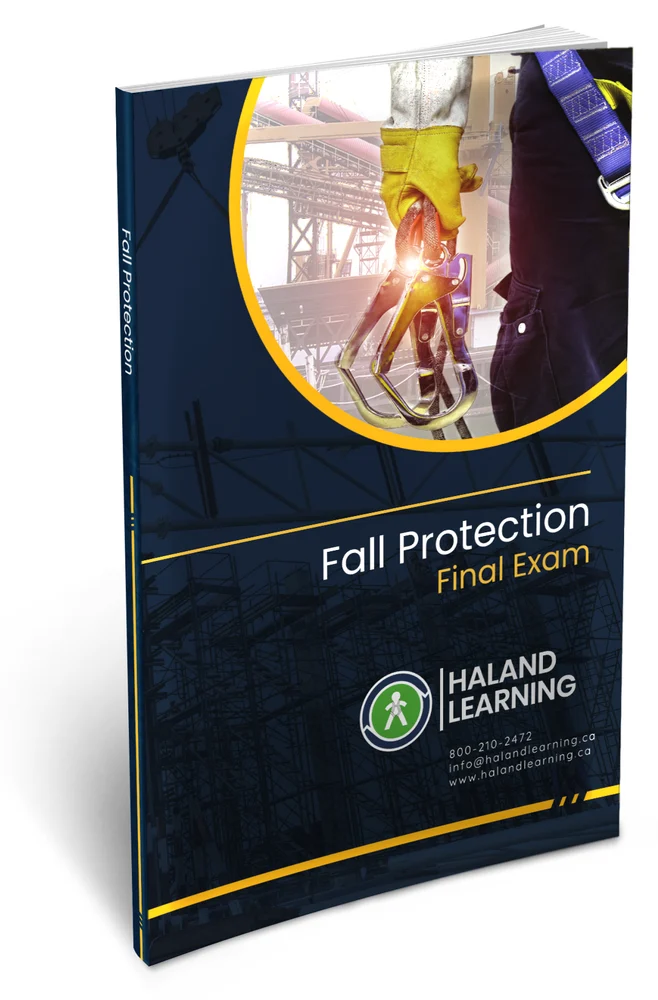
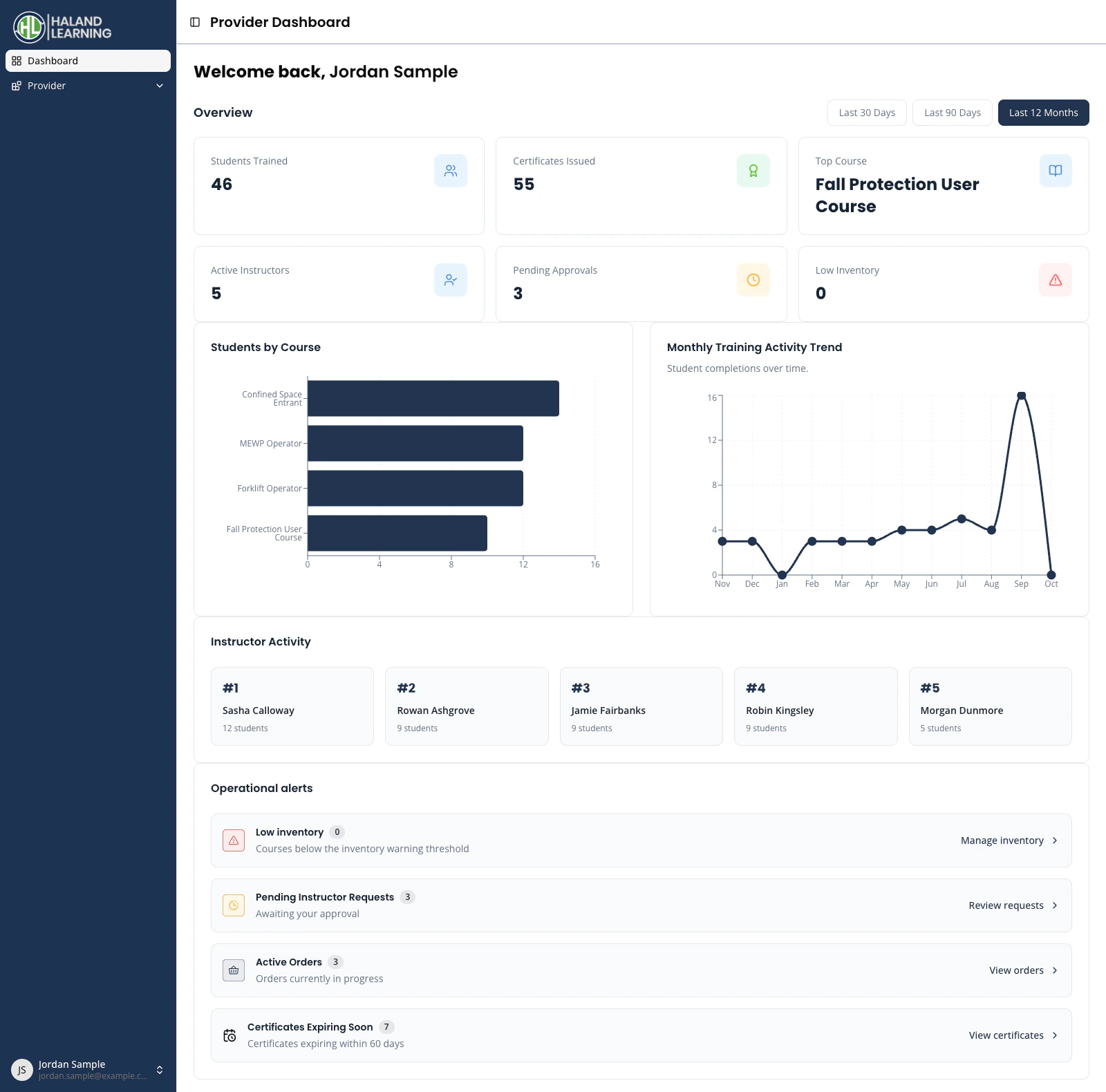
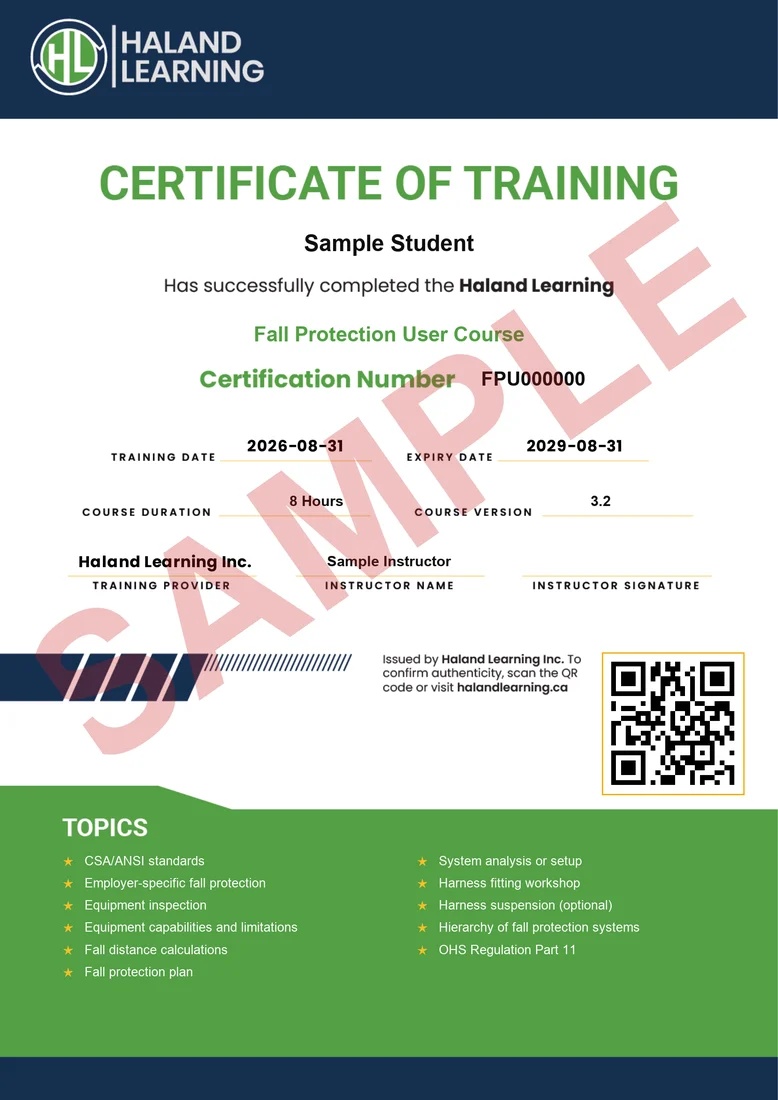
Screens and the certificate are samples with fictional data.
If you teach a Haland Learning course, you teach it with the whole set: the manual, lesson plans, slides, final exam and certificates. Haland Learning materials cannot be paired with certificates you issue yourself.
You can run your own training any time. It is just not Haland Learning certified.
Haland Learning's final exam is the only exam used. The Certification Management Platform will not issue a certificate for a failing score, and every certificate it issues can be verified online.
What's Included
Everything you need is included: your certification and all materials to run the course from day one.
Ongoing Value
3 Years
Instructor Certificate Duration
Haland continues refining the curriculum every year. Every certified instructor receives all future course updates automatically, no additional cost, no extra development time on your end. Your materials stay current as standards evolve.
Included
The Digital Certification Management Platform, called the CMP, is a web application for safety-training classes and the certificates that come out of them. It records each class, issues a numbered certificate to every student who qualifies, emails it to them as a PDF, and lets anyone check it later.
Recognition & Standards
This course aligns with CSA standards related to fall protection equipment and fall protection training: giving your certification credibility across most Canadian jurisdictions.
CSA Standards
The curriculum follows CSA Z1009:22 and the supporting CSA Z259 series, forming a consistent national baseline for fall protection instruction across Canada.
NCSO Recognized
This program is recognized under the NCSO (National Construction Safety Officer) program and is accepted in most Canadian jurisdictions where fall protection training requirements reference CSA standards.
Instructors who teach with Haland materials deliver NCSO recognized training.
See Haland Learning on the BCCSA NCSO course listCertification Requirements
01
02
03
Instructors who don't meet the annual teaching frequency requirement must renew before the 3 year period to keep the certification current.
Certificates your students receive are issued by Haland Learning and carry your training provider's name, so your company name stays on every certificate.
We do not support withholding certificates, and we have stopped working with providers that do.
Equipment Requirements
This course provides instructional materials, not equipment. Instructors are responsible for acquiring the equipment below and having it ready prior to delivering training.
Who it is for
This program is built for two types of organizations: both benefit from the same standardized curriculum and certification.
Organizations & Safety Managers
You need your team trained consistently, without scheduling around an external trainer's availability or paying per-session fees long-term.
Safety Consultants & Training Providers
You want to offer fall protection training under your own operation, with a professionally developed curriculum and recognition to back it up.
Inquiry
Already know the date you want? Schedule →
Prefer to talk? 800-210-2472
Cost Comparison
Move the slider to estimate the cost of training employees internally compared with sending them to third-party training.
| Third-Party Training | In-House Instructor | |
|---|---|---|
| Cost per Student | - | - |
| Total Cost | - | - |
Estimated Savings: - over 6 years
Estimated Classes Required Per Year: 3
Common Questions
Questions we get from instructor candidates and the organizations sending them.
You don't. Well, almost. Aside from the initial set of activations that come with the instructor training program, there is no obligation to purchase any more.
But if you do, you are delivering a program built around our own courses. We must ensure the quality and consistency of the training materials, and activation sales help us fund their improvement.
Each course represents a major investment of time, and every course continues to be redeveloped as regulations, CSA standards and best practices change. Instructors get access to new materials as soon as they are ready, without spending any of their own time on development. For example, the Fall Protection and Confined Space courses went through the NCSO approval process at no time or cost to any instructor.
You can, however, you are also required to get these as part of the instructor program. Here's why:
An activation includes:
1 to 10 days. Depending on the quantity ordered and the shipping location. It's recommended to always have at least one class worth on-hand for those unplanned sessions.
Maybe in the future. As it stands, we charge for activations when they're ordered. If there's a long standing relationship and the client can show a reliable habit of ontime payment, we can look at payment terms.
5 years.
Instructor programs are taught in person. Safety Committee can be taken online or in person. Every other course is taught in person.
Yes, however they would need further training before doing so. Teaching online is a different skillset. If possible, we could integrate this training into the existing schedule.
You can. The certification issued by Haland Learning supports your delivery of this program. If you carried on teaching using 100% of your own material afterward, it would have no connection to Haland Learning Inc.
That being said, there is no prescriptive requirement in most of Canada stating that formal instructor training is required to teach this information to others. Ontario, Newfoundland and the CSA standards are the exceptions. If you choose to deliver your own program, we won't try to stop you. Consider that you'd have to develop your own training materials, your training may not be recognized by the industry, and that if something went wrong you would have to defend your actions in court. It comes down to Risk Perception vs. Risk Tolerance.
For our courses that are NCSO approved, all Haland-certified instructors delivering our training are now automatically approved as well. No effort was expended from our instructors in order for them to be recognized. Getting accredited was no small task.
There are a few other organizations offering an instructor program. Of course, you should do your diligence and assess all options before making an informed decision.
Some things to ask the other providers. We'll answer each question to give you a comparison.
How much time in the course is dedicated to giving instructor candidates time to instruct? Each instructor will get 2 hours of actual teaching time in our program. Not 0 minutes, not 5 or 15 minutes. 2 hours, at least. We ladder their skillset after each lesson plan delivery and provide real-life tools for instructors to improve their abilities. The final lesson plan delivery is virtually unrecognizable from the first because of this conscious skill development. Each candidate is treated in accordance with their abilities. An experienced trainer would get much different feedback than a new candidate. In both cases, they learn useful tools.
Are there annual fees required in order to maintain permission to use the program? No. There is a $0 annual cost for the organization or the instructor. The only costs are student activations, and the instructor renewal every 3 years.
Do phone and email messages get promptly answered? We do.
Are you made to feel like your business is valued? We do. You and your company are not a number. We are dedicated to your success and look forward to working with you.
Many safety courses are dry, not relevant, and boring. Really boring. If it's not the course material, it's the instructor. Some agencies believe they can talk AT you for hours and that you'll somehow learn all the stuff. We know from experience and current adult instructional knowledge this approach is woefully inadequate. Every topic in the class is there for a reason. Each topic will have some type of activity the participants DO/INTERACT WITH in order to develop or confirm learning. In summary… our courses are NOT boring. While it won't be like going to Disneyland, participants will find themselves being engaged throughout the day, and they WILL learn something.
The following comprise the MINIMAL equipment required. Fall protection: anchor × 4 different types; harness × 6, at least one from each classification group (AD, AE, AL, AP); suspension trauma strap × 1; fall arrester × 1; life safety rope × 1; carabiner × 1; self-retracting lifeline × 1; confined space entry tripod × 1 for the harness suspension activity; damaged fall protection equipment × 6, at least 1 anchor, 1 harness, 1 lanyard; and access to the current CSA Z259 fall protection standards, available free through the CSA Communities portal. Lanyards: web, twin leg, rope, and non-shock absorbing. Confined space: gas monitor, ideally one per group of two students, plus a gas monitor bump test kit or station. General instructional equipment: projector or LED TV, computer, cables.
Instructor programs
Instructors commonly certify in more than one program.
Reviews
Live from Reviews.io. Company and product reviews, most recent first.
Read verified customer reviews on Reviews.io.

